
Soft Tissue Sarcomas
What are Soft Tissue Sarcomas?
Soft tissue sarcomas are a group of cancers arising from the connective tissues in the body, which include muscles, fat, blood vessels, nerves, and fibrous tissues. These tumors can occur in various locations but are notable for their tendency to develop in the limbs, trunk, abdomen, and retroperitoneum.
Types of Soft Tissue Sarcomas
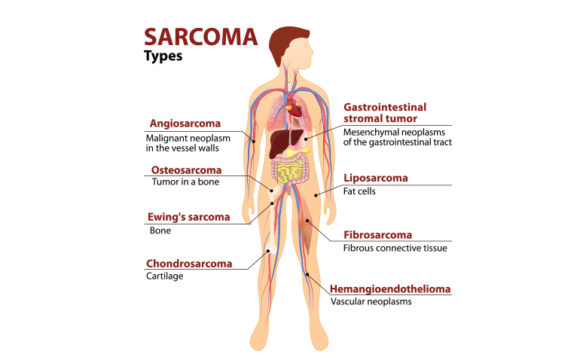
Soft tissue sarcomas include a diverse range of tumor types, with varying behaviors and treatment approaches. Some of the common types include:
- Liposarcoma: Arises from fat tissue; can be aggressive.
- Leiomyosarcoma: Originates from smooth muscle tissue; often found in the abdomen or retroperitoneum.
- Rhabdomyosarcoma: Typically seen in children, arising from skeletal muscle.
- Synovial Sarcoma: Often associated with joints and can affect young adults.
- Undifferentiated Pleomorphic Sarcoma: A common type that may arise in various soft tissue locations.
Overview of Retroperitoneal Sarcomas
Definition
Retroperitoneal sarcomas are a specific subtype of soft tissue sarcomas located in the retroperitoneal space—the area behind the peritoneum that contains the kidneys, pancreas, aorta, inferior vena cava, and other structures. They represent approximately 15-20% of all soft tissue sarcomas.
Characteristics
- Size and Growth: Retroperitoneal sarcomas often grow large before causing symptoms due to the vast space available; they may not be detected until they reach advanced stages.
- Symptoms: Symptoms may include abdominal fullness, pain, weight loss, early satiety, or gastrointestinal issues; however, many patients are asymptomatic in the early stages.
Diagnosis
- Imaging Studies:
- CT Scan or MRI: Essential for evaluating the size, location, and extent of the tumor, as well as for assessing vascular involvement.
- PET Scan: May be utilized to evaluate the metabolic activity of the tumor and check for metastasis.
- Biopsy: A tissue sample is obtained via percutaneous techniques or during surgical exploration to confirm the diagnosis and subtype of sarcoma.
Treatment of Retroperitoneal Sarcomas
Surgical Management
Surgery is the primary treatment for retroperitoneal sarcomas and is often curative when complete resection is achieved.
- Wide Resection:
- Indications: Typically for localized tumors that can be completely excised with appropriate margins.
- Procedure Overview:
- General anesthesia: is administered.
- Incision: A large abdominal incision is made to provide adequate access.
- Resection: The tumor is resected along with a margin of surrounding healthy tissue to reduce the risk of recurrence.
- Surgical Challenges: Due to the retroperitoneal location, resection may involve the removal of adjacent organs (such as the kidneys or parts of the gastrointestinal tract) if infiltrated by the tumor.
- Duration: The surgical procedure can take 4 to 8 hours, depending on the complexity of the resection and tumor size.
In some select cases, laparoscopic approaches may be considered, although retroperitoneal sarcomas typically require open surgery due to their size and complexity.
Postoperative Care
- Hospital Stay: Usually lasts between 5 to 10 days, depending on recovery and the extent of the surgery.
- Monitoring: Regular assessment for signs of bleeding, infection, or complications related to the resection is critical.
- Nutritional Support: Dietary adjustments may be necessary based on the patient’s recovery.
Potential Complications
- Common Risks:
- Infection, bleeding, and complications associated with anesthesia.
- Specific Complications:
- Organ Dysfunction: Depending on the organs involved in the resection, there can be postoperative complications related to renal or gastrointestinal function.
- Recurrence: Retroperitoneal sarcomas have a higher chance of local recurrence compared with other sarcoma sites due to their complex anatomy and late presentation.
- Lymphatic Complications: Patients may have edema due to lymphatic disruption during surgery.
Conclusion
Retroperitoneal sarcomas represent a significant subset of soft tissue sarcomas, often requiring extensive surgical intervention for effective management. Understanding the types of surgeries available, preoperative considerations, and postoperative expectations is essential for healthcare professionals involved in treating these complex cases. With meticulous surgical planning and comprehensive postoperative care, patients may achieve improved outcomes and quality of life.